See page for author, CC BY 4.0, via Wikimedia Commons

Wolfgang Sauber, CC BY-SA 4.0, via Wikimedia Commons

Beecham's Pills (Firm), CC BY-SA 4.0, via Wikimedia Commons
Thomas Beecham started life as a shepherd in rural Oxfordshire but when he founded ‘Beecham’s Pills’ in 1859, he became a pioneer in the mass production of medicines.
Thomas Beecham was born in Curbridge, near Witney, in 1820 to his parents, Joseph and Sarah Beecham. He was baptised on the 17th December the same year at St Mary’s Church, Witney. His education was brief, attending the National School at Witney Town Hall for only a year. From the age of eight years old he started work as a shepherd, earning 1s 6d a week.
During his time as a shepherd, he taught himself about the properties of various plants and he used his skills to care for his sheep. In 1833, he moved to Cropredy, near Banbury where his skills developed and he became known locally for his ability to cure animals and people alike.
From here he started to develop and manufacture herbal lozenges. He built machines from old agricultural machinery to grind ingredients and carved wooden boards into moulds to scale up his production.
In 1840, Thomas left shepherding and moved to Kidlington, where he stayed with his uncle. Here he developed his pill production while taking on various jobs to support himself. One of which was as a postman, delivering post from Gosford to Kidlingon. Then in 1842, he moved to Witney. From here he travelled to the surrounding market towns to sells his pills to the people of Oxfordshire.
After realising the demand for medicine in urban areas, Thomas made the major decision to move to the industrial north in 1845. He initially moved to Liverpool where he married Jane Evans in 1847. Then the couple moved to Wigan and set up their first shop, selling groceries alongside pills and medicines. He was popular amongst the working class population of Wigan as the pills were a much cheaper alternative to having a medical consultation with a doctor.
However, the good times did not last for long because in 1858 a mix up with an unlabelled poison bottle resulted in the death of a young boy. The people of Wigan turned on Thomas and Jane so they fled to St Helens.
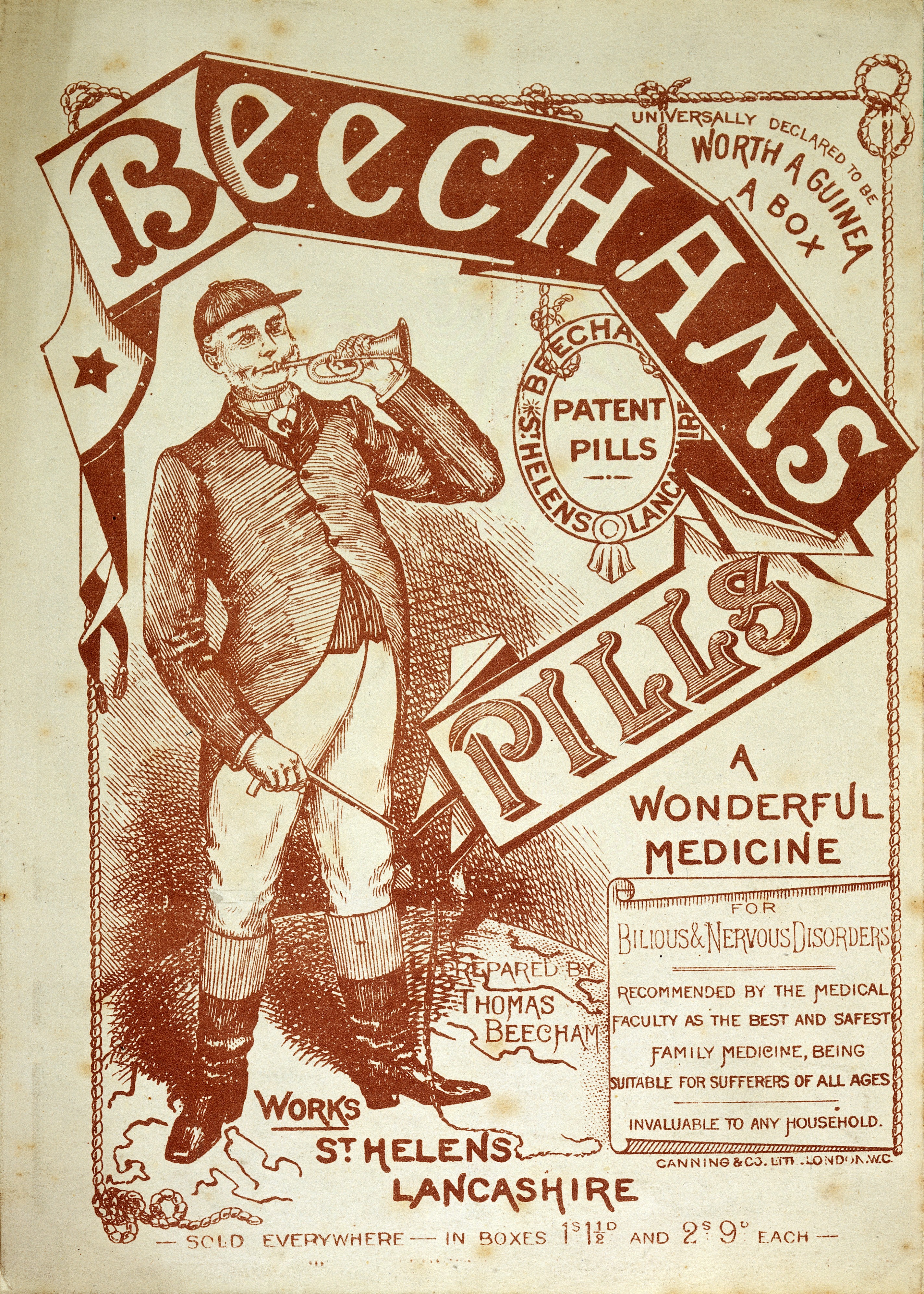
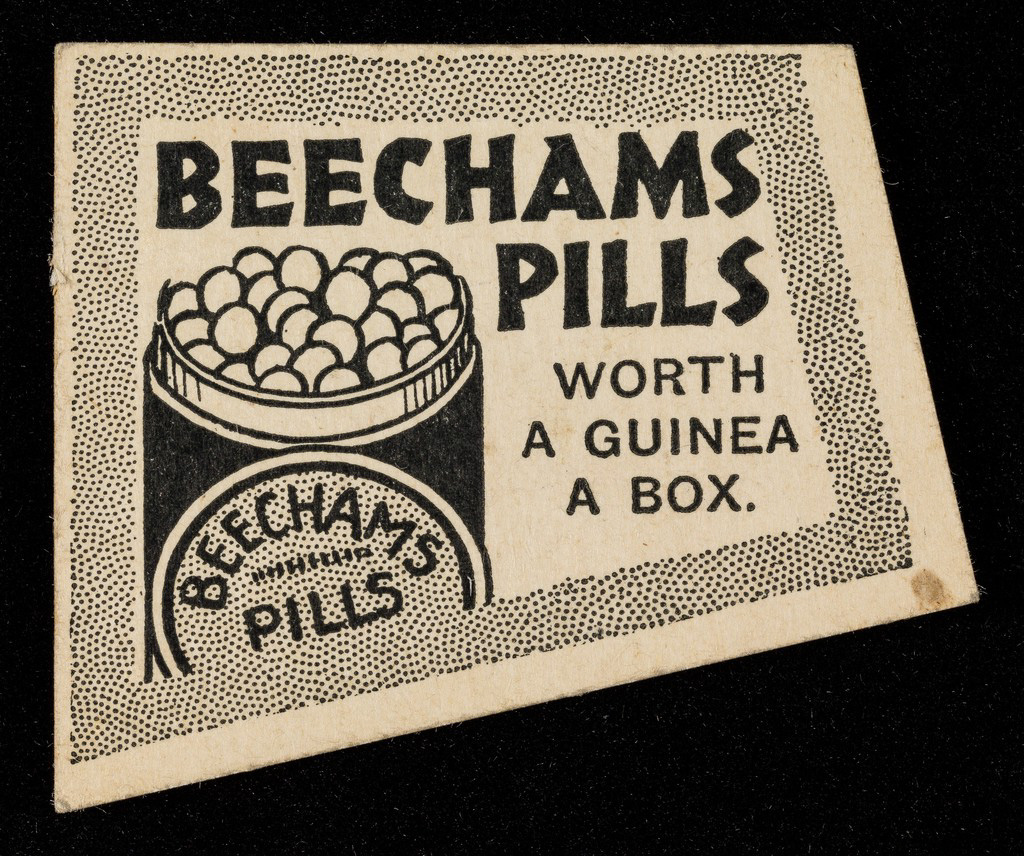
While living in St Helens, Thomas opened his first factory for the rapid production of medicines. He also created a slogan for his wares: “Beecham’s Pills: Worth a Guinea Box.” This is considered to be the world’s first advertising slogan. It was first seen in the local newspaper The St Helens Intelligencer, and gradually became known across the globe.
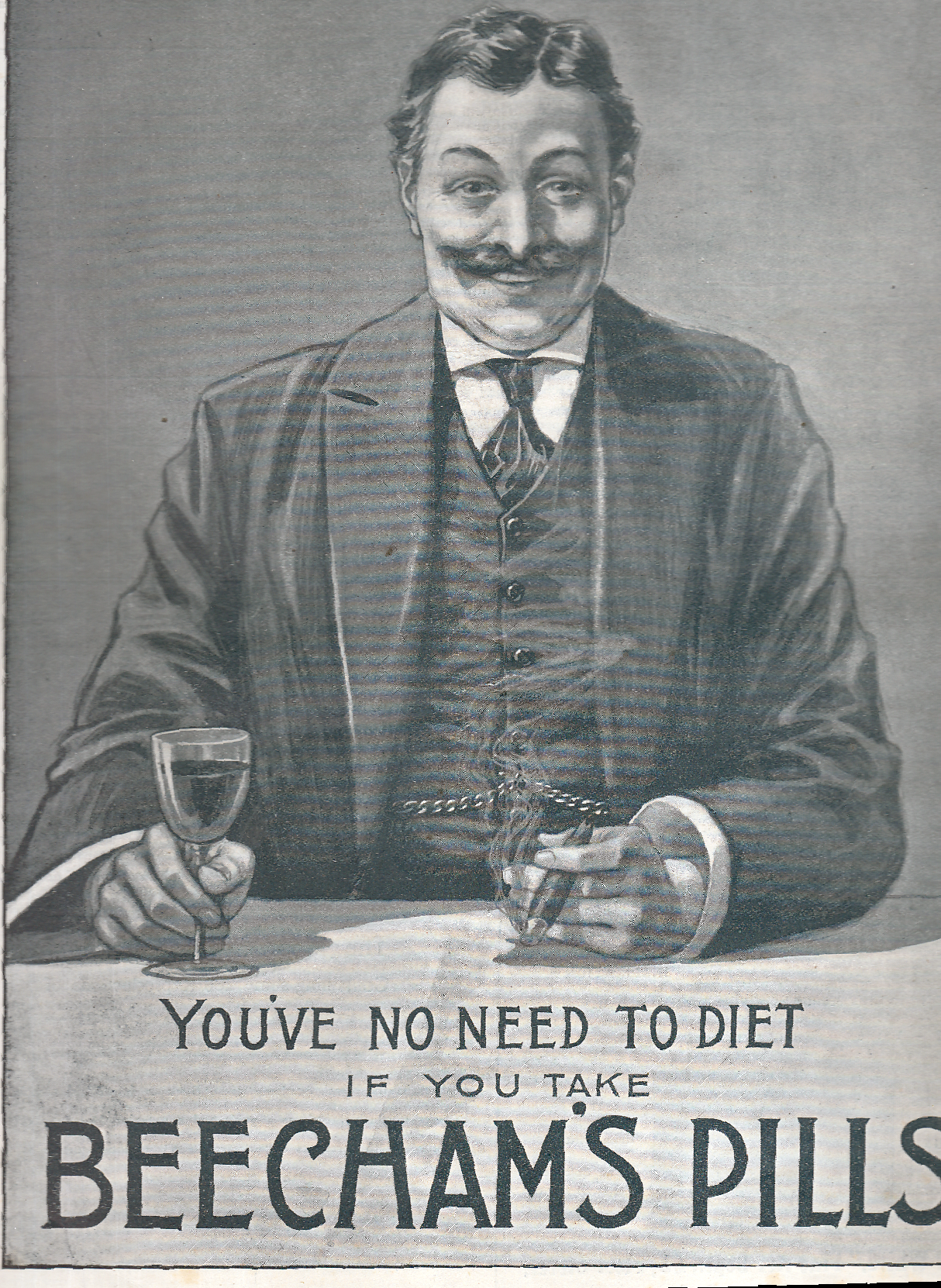
Thomas was known for his advertising talents and there is one story of a local clergyman being asked by him for permission to advertise in the hymn books. The clergyman said yes but under the condition that Thomas supplied these books. When the hymn books arrived, the clergyman was surprised to find no advertisement in the flyleaf. Then at the Christmas service, the congregation were found singing: “Hark, the Herald angels sing,/Beecham’s pills are just the thing/Peace on earth and mercy mild;/two for a man and one for a child.”
In 1863, Joseph Beecham, Thomas’ son, joined the family business. He made the company a global success, with his advertisements stating that Beecham’s medicines can cure any ailment.
Sadly, Thomas’ wife Jane died in 1872, aged 59. A year later Thomas married the much younger Sarah Pemberton but she died 4 years later. Then in 1879, he was married for the final time to Mary Sawell.
Joseph was left in charge of the St Helens factory and Thomas temporarily moved down to Mursley Hall in Buckinghamshire. Under Joseph’s supervision, another factory was built in St Helens and it was the first factory in the area to be powered by electricity. This increased production to three thousand boxes of pills a day.
By 1894 Thomas had left his wife Mary, and moved to ‘Wychwood’, a villa in Stockport. He died in 1907, and the business was taken over by his son, Joseph.
Despite his death over 120 years ago, Thomas Beecham’s legacy lives on today with Beecham’s Cold and Flu products.
By Amelia, Oxford Brookes
